The Research and Discovery For The Solution To Alopecia Hair Loss (and Hormonal Imbalance)

Introduction
This paper walks through my exact journey for discovering the proper solution to alopecia hair loss and hormonal imbalance, found in the herb Stinging Nettle, and more specifically, its Root. I say 'proper solution' precisely because, looking at the scientific literature, it seems to be that this herb was precisely evolved by nature to address all the root causes of alopecia and hormonal imbalance. I say this in the similar sense that the coffee bean was evolved to tackle fatigue, and opium from the poppy flower was evolved to be used as a pain reliever. This single herb, properly dosed and extracted, covers all the root causes of hair loss: hormones, stress, inflammation, low blood flow, and nutrient deficiencies. From plugging root causes, additional benefits arise, including hormone optimisation, stress reduction, reduced inflammation, and increased blood flow. It simply supersedes every other roundabout treatment on the market, acting as the puzzle piece the world has been searching for to solve this persistent problem.
Before I take you through my discovery process, there is some background information we must first be familiar with (in order to connect the dots, and understand how the solution to hair loss was precisely discovered).
To begin, we must be aware that currently, in the case of hair loss (and hormonal issues), no clear, definitive, wholistic solution has been found. The current leading effective treatments are FDA-approved drugs, that come with extremely harmful side effects. More specifically, the most effective treatment for hair loss and hormonal issues, are the FDA-approved drugs Finasteride and Dutasteride for men, and Spironolactone for women. The conventional claim is that excessive DHT, a hormone in our bodies, is the cause for hair loss. Accordingly, these drugs, which reduce DHT (and androgynous hormones more broadly for Spironolactone), will ultimately allow hair to grow back.
There are some other drugs, and additional root cause factors to hair loss that we must also know about:
1. Minoxidil is another drug that helps hair growth topically by treating lack of oxygen or blood flow at the follicle - another major factor for hair loss.
2. Other forms of hair loss, such as hair loss caused by inflammation, require what is known as JAK inhibitors or steroid shots. The idea is that these shots reduce inflammation at the follicle, allowing hair to grow.
3. The last major factor as a cause for hair loss is by stress or nutrient deficiency, called telogen effluvium. It's usually fixed by meeting those nutritional defects, or with the passage of time and the reduction of the stressful event.
To summarise, hair loss is generally caused by hormones, and treated by leading FDA-approved drugs Finasteride, Dutasteride, and Spironolactone. Yet there are also other major root causes of hair loss that are equally significant, including as a result of low blood flow, inflammation, stress or nutrient deficiency.
Going forward, it's important we're familiar with this landscape of factors causing hair loss, and their current treatments. As such, what I have just outlined, is the first piece of information people suffering from hair loss need to be aware of.
There's now also a second piece of information to be familiar with, in order to connect the dots and solve the hair loss problem.
That information, is to remember that Merck, the inventors of Finasteride back in the 80s, had actually discovered the drug accidentally when they were trying to treat prostate issues in men, called Benign Prostatic Hyperplasia (BPH).1 Merck were surprised users reported hair growth, subsequently filing to the FDA for release of the same drug at a lower dosage, named Propecia, for hair loss. It was Jean Wilson and Donald Coffey with collaborators, who first discovered that prostate size could reduce, and hair loss was resolved, by inhibiting an enzyme called '5a-reductase', which reduced the levels of the hormone DHT.2 The fact that Finasteride, the leading hair loss drug, was found by accident while treating the prostate, is an important point to my discovery process, and one we will return to in my search for the cure to hair loss.
With these two points in mind, I went on my search for a natural remedy, and I found some preliminary convincing data. This preliminary data was convincing enough for me to go and test the waters in reality, experiment, and eventually solve this problem once and for all. Let's now take a look at the first batch of data I found.
In 2005, a researcher out of Iran conducted a randomised, double-blinded study on 620 patients with BPH, the same prostate issue Merck tried to treat with Finasteride.3 He found after 6 months, 81% of patients on Nettle Root extracts reported improvements in their prostate. Another researcher, Lopatkin et al., performed a randomised, double-blind, placebo-controlled trial of 253 male patients,4 as well as Schneider et al., with 246 patients, both finding significant improvements with Nettle Root extracts.5
Lastly, but, most importantly, in a direct head-to-head clinical trial, nearly 500 men with BPH were randomised with either Nettle Root (as one of two ingredients), or Finasteride.6 At the end of the 6 month trial, there was no statistically significant difference between the groups, indicating that Nettle Root was a key ingredient as effective as Finasteride, and without the side effects.
That's thousands of patients in randomised, double-blind, placebo controlled trials who found Nettle Root effective for the prostate, including comparable to the best FDA-approved drug for hair loss: Finasteride.
Now, you might be wondering: why cite prostate studies?
Remember what I said about Merck and how they invented Finasteride. Just as Finasteride, originally developed to treat prostate issues, was later found to be the most effective drug for hair loss, I find that research on Nettle Root's prostate effects also strongly supports its potential for treating hair loss. Not only do Finasteride and Nettle Root produce almost the same results for the prostate, they also both work the same way in the body.
To elaborate, further research I found confirmed Nettle Root's prostate-reducing effects works in one way, exactly like Finasteride, acting as a 5α-reductase inhibitor, to reduce the DHT hormone.7 Inhibiting 5α-reductase (5α-R) prevents testosterone from being converted into dihydrotestosterone (DHT), elevated levels of which are linked to the development of benign prostatic hyperplasia (BPH).8 Crucially, this exact same mechanism also plays a key role in the progression of major hormonal hair loss conditions, such as alopecia—highlighting its significance to our investigation.9
Therefore, by combining these two sets of studies together, we find that Finasteride and Nettle Root not only produce similar results on the prostate, they're also shown to work the same biological pathways. And if Finasteride is a leading hair-loss drug, taking into consideration all the evidence, it must then be strongly implied that Nettle Root is also an effective natural solution for hormonal hair loss.
No one has made this direct connection before, bringing together multiple studies and drawing these precise, logical conclusions, until now. The shared mechanism in the body, the shared prostate results, Finasteride's proof both as an effective prostate and hair loss drug, are all precisely why Nettle Root should be seen as (and objectively is), the alopecia hair loss solution we have been looking for.
After my initial discovery, I found numerous other studies with similar results. However, the papers above, and what I knew about Merck & Finasteride, were enough to prompt me to venture into the field and experiment with Nettle Root myself.
Before we continue the journey of my investigative process, let me then first present some more research papers I found after the fact, to further strengthen the argument.
In a very recent 2022 retrospective cohort study, Finasteride, Dutasteride, Tamsulosin, Saw Palmetto and Nettle Root were compared against each other. The data was gathered across 3000 private practices in Germany, and compared 3,133 patients who used Finasteride, 418 who used Dutasteride, and 3035 who used Saw Palmetto and Nettle Root. The authors concluded that Saw Palmetto and Nettle Root were superior to placebo and comparable with Finasteride and Dutasteride in effectiveness across all placebo controlled, randomised trials.10 It was also noted that Nettle Root was a key ingredient as effective as Finasteride and Dutasteride, and came without the side effects on sexual function that occurs with the aforementioned FDA-approved drugs.11
Friesen also reported interesting results in a multicenter long-term study for a total of 4480 patients who received Nettle Root for approximately 6 months. The extract improved urinary symptoms associated with BPH in 78% of patients after 3 months and in 91% of patients after 6 months.12
In another open, multi-centre study with BPH, 5492 patients were treated using Nettle Root for 6 months. According to the evaluation of the physicians the therapy was successful in 88.2% of total patients, 83.2%, 80.4% and 60.4% of patients with BPH stages I, II and III, respectively.13
We haven't even mentioned the plethora of other studies investigating Nettle Root on over 17,000 patients, across 34 clinical studies, which exemplified strong evidence that the root works on its own with effect.14 Important to note, on all patients, no serious adverse effects were ever reported.15
And lastly, of course, let me mention the benefits specifically for women. Stinging Nettle was also found comparable to Spironolactone in head-to-head studies. According to Najafipour et al., women saw a reduction in hyperandrogegism and its related symptoms using Stinging Nettle, including hair loss, reduction in acne, oily skin, and inflammation.16
Ok, with all that being said, let's now return back to the investigative journey.
To summarise, after putting two and two together, it was clear. If Merck accidentally discovered one of the most effective treatments for hair loss through originally inventing Finasteride for the prostate, and Nettle Root was a key ingredient that was 'as effective as Finasteride' for the prostate in strong clinical trials, then there stands a very strong possibility that Nettle Root could also have the same effect for hair.
And to strengthen the hypothesis even further, Nettle Root was found to, in one of its many processes, work the same way in the body as Finasteride, inhibiting the 5a-reductase enzyme to lower DHT levels and let hair grow back.
So why couldn't scientists for decades figure it out? I will explain that in precise detail shortly, but for now, let me continue explaining my discovery process so you can understand exactly how I solved it and how hair loss and hormonal balance can be properly treated.
In my discovery process, I believe I was lucky here compared to others who would try go down the same path.
What most people would do here, is they would try and buy a Nettle Root extract, likely in pill, powder, or serum form, believing that this would replicate the exact same results as what the researchers in the papers reached.
However, that's not what I did; I instead went and bought the whole roots, clean, dry and freshly harvested (I actually first purchased whole Nettle Leafs, and thereafter bought Nettle Roots, not realising they were different). I did this because while I was in Europe, the raw herbs were the most accessible to me at the time; more than pills, powders or extracts. I also chose the raw herb because my mother, who practised traditional chinese medicine, always bought fresh, raw herbs you could see with your eyes. Buying whole, dry herbs, is the most safe, reliable way, to take herbal medicine, precisely because pills, powders, or extracts, often undergo poorly executed manufacturing processes. This causes the products to be ineffective, leaving you second-guessing if anything is actually working. It is for this reason that I believe the recent advent of shoving herbs into pills or powders is likely one of the greatest health scams of the modern era. Often, improper industrial extraction techniques are performed on the herbs, causing the medicinal compounds to have degraded by the time the pill or powder reaches the shelf. Essentially, it's a practice of sacrificing effectiveness for convenience.
Given this, I started with approximately 8g of whole, dry Nettle Roots, and the results were extremely convincing. The way I initially did this was through a hot water extraction of the whole root, with about 800ML of hot water (think, a similar process to using hot water to make coffee from coffee beans). I started with this amount because I knew this was the most common way practiced by traditional herbalists. In herbalist practice, generally a 1:10 ratio of herb to liquid was indicative of a maximum extraction of all beneficial compounds of the herb. Subsequently, from the very first results, I knew that what I had discovered worked, without a shadow of a doubt in reality, beyond the scientific papers; beyond mere words. I could feel the effects on my prostate, and I could see an immediate reduction of sebum production in the hair, with growth starting almost immediately after the first several days of servings. Minor eczema and itchiness on my arm had stopped, and my general posture and metabolism had improved. I upped the dosage to approximately 10 grams of Nettle Root for 1.2L of hot water the next serving, because I felt intuitively there was still more to the dosage left to squeeze. After days of trial and error, I landed on 10-12 grams of Stinging Nettle at 1.2L of hot water as the ideal ratio. This ensured an entire saturation of the body with all the bioactive compounds from both Nettle Root and Nettle Leaf, enabling me to address all the root causes of alopecia and hormonal imbalance.17 At this point, I knew, without a shadow of a doubt, that a 10-12g of Stinging Nettle in 1.2L of hot water, using both whole, dry Root and Leaf, was the absolute proper solution for hair loss, prostate issues, hormonal imbalances, as well as general inflammation and metabolic syndromes. Furthermore, after a thorough look at all the scientific papers in the field, the research also confirmed what I had experienced first-hand. All of it was convincing enough for me to quit my job, and embark on a mission to revolutionise both the hair loss and hormone therapy industries, setting them straight.
Now, it was only after throwing a single dart at the dartboard and hitting it almost right the first time, did I realise that the exact way I did things initially was the absolute right way, and subsequent tries to recreate the results lead to ineffectiveness and failures. After trying to change a few things here and there, I realised several variables required strict, extensive control. Let me explain.
1. The quality of the Stinging Nettle matters;
After I discovered Stinging Nettle worked for me in Europe, I moved back home to Australia, thinking that the quality of the Stinging Nettle would be the same, but it wasn't. I bought from 10 different suppliers, to find only 1 batch had worked. The reason this occurred is precisely because most Stinging Nettle is imported from Europe, improperly packaged, exposed to the air, left for long durations on sea ships and in customs, before arriving to the final destination. At that point, the herb has not been properly maintained, and the medicinal compounds within the herb have degraded. Think of it like any other fruit or vegetable; quality differs amongst the same kind. Although different batches of fruit, vegetable or herbal plants might all look the same with your eyes, there are differences in quality beneath the surface. These differences depend on factors such as the soil it was grown in, chemicals used, whether they've been left outside for too long, and many other factors and variables.
2. The dosage is important;
For the batch that did work when I was back home in Australia, a higher amount was required, approximately 20g, still with approximately 1.1-1.2L of hot water. That's most likely because the Stinging Nettle was from a poorer quality soil, meaning more of the herb was required to gain the same effects. I had no idea how long the herb had been left out in the air for either, but that could possibly be another factor. It's important to note then, that the dosage I recommend is for our specific Stinging Nettle that The BioHealth Company offers. Therefore, the soil quality, and proper storage processing of the herb, are two vital factors to control for. We must control for these factors to ensure proper execution and successful delivery of the herb at scale to the market. Of course, we can proudly say at The BioHealth Company, that we've consciously taken these two factors into consideration.
3. The extraction method is also important;
Of all the different variables I found necessary to consider, this was the key one. It's actually in hindsight, why dermatologists and modern scientists for decades now have not been able to discover Stinging Nettle as the proper solution for hair loss, and someone like myself was able to come in and solve the puzzle.
When I went back home, I had found some Stinging Nettle pills on eBay, desperate to try and rediscover the same effects I had found originally while I was in Europe. After testing them, I realised that they were absolutely useless; a complete scam. In fact, again, I'm certain 99% of natural pills and powders for medicinal herbs are scams.
Take Nutrafol, for example, the leading natural solution for hair loss, which comes in pill form, sued for improper dosages and effectiveness of their herbal extracts.18 With that being said, exactly why a supplement like Nutrafol works is precisely because of the synthetic vitamins doing the work to help treat people with hair loss caused by nutritional deficiencies. It is not because of the herbal extracts in their pills. Essentially, what Nutrafol really is, could deem to be an overpriced multivitamin. We can further justify this position by taking a precise look at Nutrafol's own clinical studies.19 As you can see, they purposely exclude women who have hair loss caused by hormones or genetics, only including those with hair loss caused by nutritional deficiencies.20 It's an evil world when some of the leading players in the industry are tricking you like this to take your money. And it's even more evil when you realise just how many ineffective or slimy scam products are in this space.
Anyway, let's continue back on track.
After trying Stinging Nettle pills, I then tried a tincture of Stinging Nettle. Unlike using hot water, a tincture extract requires soaking herbs in an alcoholic solvent, arguably creating a very potent liquid that extracts the medicinal compounds from the herb. This is in contrast to soaking the herb with hot water, which is what I did the first try. Why an alcoholic solvent is more potent compared to hot water for extraction, is precisely because the chemical structure of alcoholic solvents makes it easier to draw out certain compounds from herbs. Specifically, the alcoholic solvents have a unique polarity and electron charge, which allows this to happen.
Now, in my discovery, I found that ml for ml, tincture extracts of Stinging Nettle were correctly more potent than the hot water extracts, but their effects were limited to the prostate and lasted only 6-8 hours. The effects for hair loss and hormone balancing therefore, were not received from extracting Stinging Nettle with an alcoholic solvent. This result seemed to be backed up by the scientific papers, which I will later present more in-depth and dive deeper into. For now, it was another dead end I hit when it came to solving hair loss.
These three variables therefore, which I luckily hit right the first time by avoiding them, were significant to control in solving the hair loss problem. The Stinging Nettle must be (1) harvested from excellent soil, (2) properly stored to maintain quality of the bioactive compounds, and (3) taken in whole form only with a hot water extraction of a specific dosage. If these three conditions are not met, then it will simply not work.
One more caveat must be mentioned here that is important, but not directly related to the quality of the herb. For a brief period of time experimenting with Stinging Nettle, I found that nothing was working precisely because I was calcium deficient. It seems to be that calcium is vital to ensuring all the other compounds work effectively, especially for the prostate, as well as for all the subsequent processes on our hormones. This seems to be verified as well by the literature, where calcium is importantly linked to prostate, hormonal and hair inefficiencies, as well as metabolic processing more generally.21 While it's widely known that calcium is required for bones, we must also be aware of the fact that calcium is required for blood contraction and dilation, muscle function, nerve function, and hormonal secretion, amongst others.22 What's fascinating to note here is, gram for gram, the plant with the highest amount of calcium, is actually Nettle Leaf. Nettle Leaf has the highest concentration of calcium amongst any plant, with 691mg of calcium per 100g.23 So it seems that the entire plant, root and leaf, is intelligently designed to take this calcium factor into consideration.
That finishes up my first-person discovery process.
In summary, Nettle Root, according to the scientific literature, was as effective as Finasteride, worked the same way in the body as Finasteride, and then against convention, I went ahead and confirmed exactly what was required for Nettle Root to work for alopecia, solving this problem once and for all.
In the next section, we will dive more deeply into the scientific papers to find out exactly why no other scientist in the field could discover Stinging Nettle as the solution for alopecia hair loss and hormonal balance for themselves.
Why no scientist or dermatologist in the field could solve the hair loss & hormonal imbalance problem
What I realised after looking at the scientific literature, is that researchers in the field had made several grave analytical mistakes in trying to solve the hair loss problem; similar to the problems that I had run into. Some dots were there in the science to be connected, but not a single person had the intuitive process guiding them to correctly connect them all. Let me now explain why.
First, in terms of Nettle Root and hormonal hair loss, what researchers did wrong was they did not properly extract Nettle Root with the correct solvent - hot water - a key part of the entire process.
As I previously briefly explained, the type of liquid used to extract compounds from a herb affects what gets extracted. For example, using an alcoholic solvent (like ethanol or methanol) to extract compounds from a herb, will pull out a different profile of compounds compared to extracting with hot water, or other liquids like hexane or ethyl esters. It’s similar to how making coffee with alcohol instead of hot water would result in a completely different drink, in the sense that alcohol extracts different compounds from the coffee bean than water does. As previously stated, the difference in what gets extracted is due to the chemical nature of the solvent used, more precisely the polarity or electrical charge of the solvent.
That is the key reason why decades of scientists had found Nettle Root was excellent against the prostate, even as effective as Finasteride in head-to-head trials (and without the side effects) - but couldn't work it out for hair loss. In almost all research papers, scientists had used a 20% methanol solvent extraction of Nettle Root for their method.24
20% methanol solvent extractions of Nettle Root lead to the most immediate results of prostate reduction, clearly outlined by the literature. Yet, a question I have still stands: If Nettle Root works comparably to Finasteride for the prostate,25 and we also know Nettle Root includes DHT regulating compounds just like Finasteride,26 why couldn't scientists duplicate Nettle Root's effects to hair loss, as we could with Finasteride?
That exact reason is because not a single scientist went deep enough with Nettle Root in how it was extracted with hot water. Some individual scientists however did leave remnants of results with hot water, and the literature bears that out. However, no one came in and collected all their individual citations and truly revealed why Stinging Nettle as a whole, and more notably it's Root, is the most powerful solution for hair loss & hormonal imbalance. Essentially, what happened was one scientist decades ago found a significant effect with 20% methanol, and every other scientist in front just followed the chain, duplicating methanol or similarly using ethanol. However, very rarely, if at all, did a scientist question whether a different solvent, like hot water, would lead to a different, perhaps more beneficial solution. In fact, it's most likely scientists could have been put off by the thought that Nettle Root could treat hormonal hair loss, precisely because methanol extracts did not show a significant reduction in DHT - only at larger doses.27 This evidence however, does not mean that Nettle Root is poor at reducing DHT; it simply means that Nettle Root, specifically extracted with methanol or ethanol, will not significantly reduce DHT. In the context of other research that shows Nettle Root definitively has DHT inhibiting compounds within the herb,28 what this instead exemplifies clearly to me is that the wrong solvent (ethanol/methanol) was used to efficiently extract those DHT regulating compounds within Nettle Root. And again, remember, it is an absolute fact in chemistry that the type of solvent you use to extract from the herb (i.e. hot water, ethanol, methanol), affects the compound profile to be extracted.
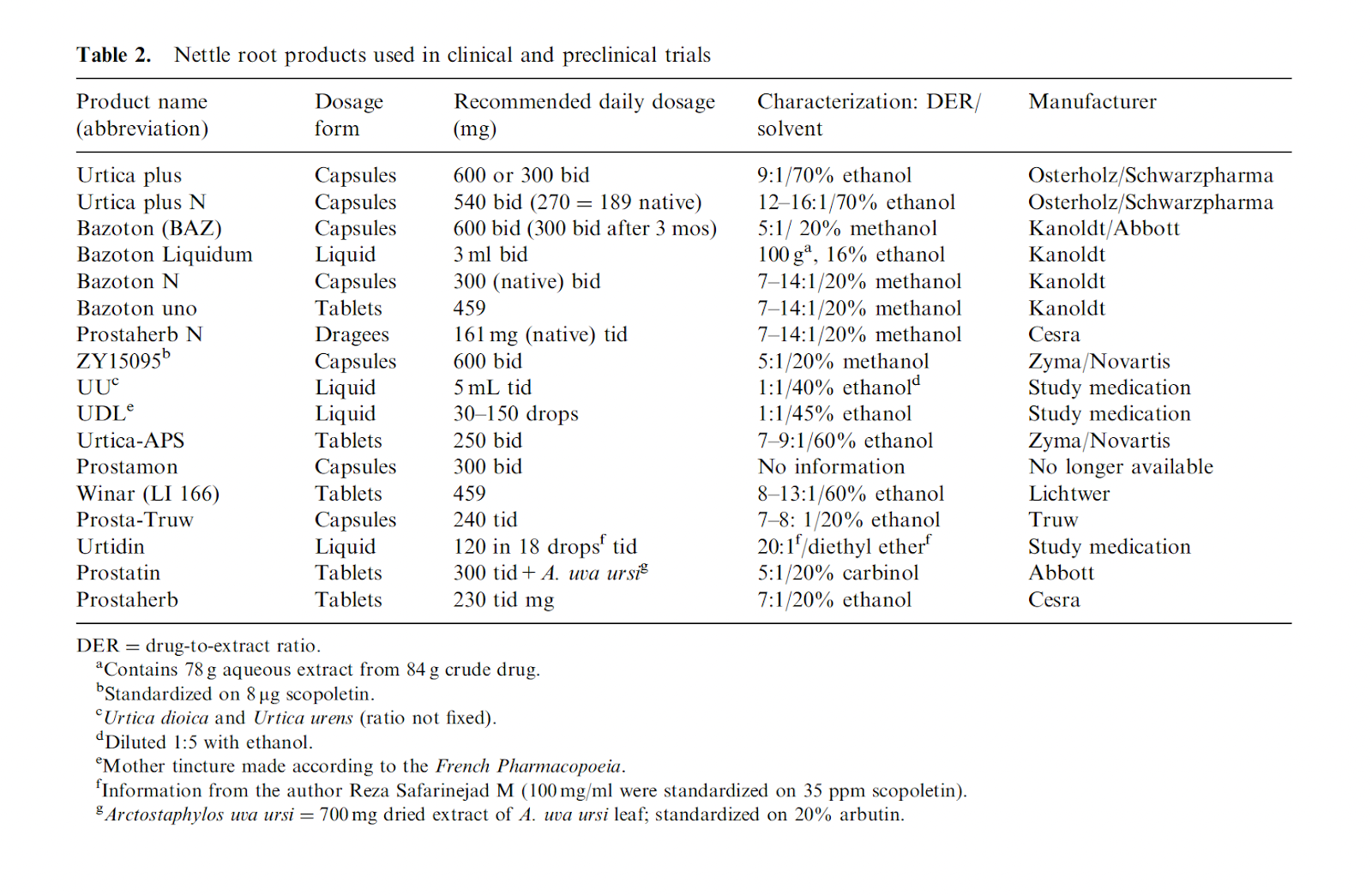
Only few scientists had briefly written about the difference in extraction between an 'aqueous extract' (water) of Nettle Root versus methanol or ethanol extracts. I have now collected all their research so we can more deeply describe their differences.
The fact is that many compounds in Nettle Root, such as the lignans, seem to be hydrophilic,29 meaning they're more easily extracted in 'aqueous extracts' instead of the ethanol/methanol ones.30 Other water-soluble compounds include isolectins, polyphenols, polysaccharides, and sterols.31 Nettle Leaf too, has it's own compounds, including its own polyphenols, flavonoids and saponins. The fact of the matter then, is that each of these hot-water extracted compounds in Nettle Root and Nettle Leaf, possess their own specific benefits towards overall hair health and hormonal health that were majorly overlooked. Thus, if reducing the prostate is your goal, a 20% methanol extraction of Nettle Root, seems to be an appropriate solvent. However, if you want to target all the root causes of hair loss & overall hormonal balance, as well as prostate issues, then according not only to me, but also partly by the science, it's actually an 'aqueous extract', or in layman's terms, a hot water extract, that you want of preferably both Nettle Root and Nettle Leaf; of Stinging Nettle in its entirety (at clinically effective dosages). That's precisely because hot water will extract the full spectrum of compounds from Nettle Root and Nettle Leaf which combine to alleviate all the root causes of hair loss, prostate issues, and hormonal imbalances, amongst other benefits. The methanol extract, that which is used by industry, only extracts the plant compounds within Nettle Root that helps prostate problems.
Now, for the sake of perfect analysis, I need to mention another obstacle here that might have stopped scientists short of following this path and address it.
Let's return back to the point about Merck and their discovery of Finasteride, and how it can specifically relate to hair loss as a result of hormonal imbalance. What Merck had discovered was that it was a reduction in levels of the hormone DHT that lead to hair growth. They showed, through inhibiting the 5a-reductase enzyme with Finasteride, that levels of the DHT hormone would reduce, and in doing so, the follicles grow back.
If scientists however read what an 'aqueous extract' of Nettle Root did for SHBG levels, in the context of what they knew about DHT and how it worked for hormonal hair loss, they would immediately presume an 'aqueous extraction' of Nettle Root as working against hair loss (not solving it).
Specifically, an 'aqueous extract' of Nettle Root had a significant effect on inhibiting SHBG levels,32 thereby influencing DHT as well as other hormones. For women, hormones like DHT and testosterone drop, alleviating symptoms of hyperandrogenism, PCOS and other hormonal irregularities.33 For men, however, an inhibition of SHBG (Sex-Hormone Binding Globulin) levels actually means an increase in free testosterone and free DHT levels.34 In men, less SHBG (a protein that binds to hormones rendering them inactive) binding to DHT would therefore mean more free DHT roaming around. And now, in the minds of scientists looking to cure hormonal hair loss and hormonal imbalance, inhibiting SHBG levels via an 'aqueous extract' of Nettle Root would, at first presumption, make hair loss worse, theoretically, due to the presence of more DHT! In other words, if Finasteride showed that you need to lower DHT to grow hair for men, but Nettle Root shows to lower SHBG, which actually raises free DHT, then at first presumption that would mean hair loss would be made worse by Nettle Root.
However, what I found, was actually different. While reducing DHT levels is one way to prevent DHT from touching the hair follicle (leading to hair growth), it is not the only way, and it is certainly not the most optimal way. It is merely the way that was accidentally found by Merck. DHT is a necessary hormone in the body with its own variety of functions. Whilst obliterating DHT levels is one way to leave little DHT to affect the follicle (allowing for growth), this method will come with severe side effects. Some of those side effects include libido issues, depression, and suicidal thoughts.35 Even though Merck claims a mere 2% side effect rate, what people aren't necessarily aware of is that they were already sued, and agreed to settle out of court to the copious amount of people that sued them. These lawsuits were for understating the risk of persistent sexual side effects, and also misleading investors about the safety profile of Finasteride, downplaying side effects.36 Therefore, in reality, the side effects are much stronger than the 2% that Merck self-reported.
It is at this point where more meticulous logical analysis is required and I will now thoroughly address this point of concern.
Instead, I found that the more optimal solution would be to understand that we can still have DHT in the body, but alter the sensitivity of DHT to the hair follicle; of how specifically the hair follicle reacts to DHT. What occurs more precisely in fact, is that hair follicles of those suffering hair loss are more sensitive to DHT due to increased expression of androgen receptors at the follicle.37 The androgen receptors at the follicle become more sensitive to the DHT that is present, leading to eventual miniaturisation and hair loss. Therefore, it's not necessarily DHT levels, but rather the increased sensitivity of the follicle to DHT that causes hair loss. And this claim holds true on the basis of the scientific papers available, as well as pure logic. You see, if "high DHT" or "DHT" was the cause for hair loss, then everyone with high DHT levels must see hair loss, but that is simply not true. Younger men have higher DHT levels than older men, yet it's older men with much more prevalence in hair loss.38 Additionally, women too, have DHT, yet do not experience hair loss as a result of DHT reduction. We know this because Finasteride was also tested on women, but reducing their DHT did not have a significant effect on recovering women's hair loss; only men.39 Lastly, not every male with high DHT or DHT loses their hair; it's the genetic predisposition of the follicle to be sensitive to DHT that causes the hair loss.40 Accordingly, DHT, or high DHT levels cannot be said to be the cause of hair loss. Nuking DHT, which Finasteride (and Dutasteride) does, is merely one method to prevent DHT from affecting the hair follicle. However, given the side effects that come with nuking DHT levels from FDA-approved drugs, the more optimal way is to let DHT be available for its necessary bodily functions, and instead affect the sensitivity of the hair follicle to DHT or the cellular expressions of the follicle to DHT. That, is the true root cause solution to hormonal hair loss.
In the case of the latter scenario, that seems to be what a full spectrum hot water extraction to Nettle Root does (with the formula rounded out by Nettle Leaf). A hot water extraction of whole, dry Nettle Root will regulate or optimise DHT levels, as well as other hormones, and it will also positively affect the hair follicle's sensitivity to DHT, preventing hair loss and encouraging hair growth.
In the sense of hair loss specifically as a result of hormones, such as DHT, Nettle Root is therefore absolutely superior to the best FDA-approved drugs for hormonal hair loss & hormonal imbalance. It works without the side effects that comes with FDA-approved drugs, and instead provides additional benefits for the consumer on top of hair loss. Specifically, this includes preventing hair loss whilst still allowing DHT to be present, exercising its necessary bodily functions by affecting sensitivity and cellular expressions to DHT at the follicle instead.
Now, let's turn specifically to Stinging Nettle and its effects on the sensitivity of the follicle. What do we mean exactly by Nettle Root and Leaf allowing DHT to be present, but instead altering it's sensitivity to the hair follicle? We know that's what Nettle Root does (and as we will see, Nettle Leaf also assists in tackling the follicle's sensitivity to DHT, in addition to other benefits),41 but how exactly does Nettle Root, and Leaf, work together to achieve this effect?
Here, it seems the science shows that both Nettle Root and Nettle Leaf clearly work to also affect DHT's sensitivity at the hair follicle, doing so much more than merely regulate hormones. Firstly, Nettle Root and Nettle Leaf have anti-inflammatory properties that lowers inflammation at the follicle, which in turn reduces the sensitivity of the hair follicle to DHT.42 This occurs because scalp inflammation has shown to make follicles more susceptible to DHT's effects.43 Therefore, if Nettle Root and Nettle Leaf repairs the inflammation, then the follicle reverts back to homeostasis and is protected against DHT in this way.
Furthermore, in terms of Nettle Root, and it's effects on androgen receptor sensitivity in the follicle directly, there is a lack of research on that. However, there is plenty of research on how Nettle Root affects androgen receptor sensitivity in the prostate. More specifically, the research on Nettle Root has shown that it can clearly modulate androgen receptor activity in the prostate.44 Nettle Root is suspected to do this by either inhibiting the binding of DHT to these receptors, or altering receptor expression levels, potentially reducing the androgenic effects in prostate cells.45 Given this evidence, I believe we can reasonably infer that similar effects occur at the scalp, as the same androgen receptor activity is present in hair follicles (given the close association between hair loss and prostate). This parallel is further supported by the fact that we are inducing full-body saturation with a hot water nettle root and leaf tonic, thereby also sending these nutrients from the tonic to the scalp. More importantly, we know generally that the prostate and hair follicles share closely linked mechanisms, as evidenced by Merck’s findings with Finasteride. Therefore, if Nettle Root can directly modulate androgen receptor activity in the prostate, it’s plausible that it could have a similar effect on hair follicles, potentially reducing their sensitivity to DHT in that way as well.
Accordingly, to recap, we believe Stinging Nettle affects sensitivity of the follicle to DHT both indirectly and directly. First, by the root and leaf both reducing inflammation that can worsen sensitivity of follicles to DHT. And secondly, by the root likely directly altering androgen receptor activity at the hair follicle. We support the latter argument by looking at the strong evidence that Nettle Root does this at the prostate, and also understanding both the prostate and hair follicles respond to DHT via similar androgen receptors mechanisms. This argument is also strengthened once again given our dosage method is a full body saturation of hot water extracted Nettle Root and Nettle Leaf, which should thereby also affect the scalp.
This is a fitting point to conclude the analysis on hormonal hair loss as well as hormonal imbalance, and segue more deeply into how Stinging Nettle in its entirety (Root and Leaf) addresses the other critical root causes of hair loss.
Stinging Nettle's Root and Leaf does target the other root causes of hair loss at the follicular level. We've briefly mentioned one of those already and its intercorrelation with DHT - inflammation. Let's now look more deeply at those other factors and how Stinging Nettle (Leaf and Root) addresses all of them, clearly touting it as the king solution for hair loss & hormonal imbalance.
Inflammation
As we briefly mentioned before, inflammation is also another major factor for hair loss. The inflammation at the scalp is invisible to the naked eye, but visible under microscopes, surrounding the follicle.46
The literature is beyond convincing that hair loss in both men and women is present with follicular micro inflammation.47 This inflammatory process is deemed as an inseparable part of the hair loss process, in connection with the interaction of DHT to the augmented androgen receptor expression leading to hair loss48 Repeated studies on IL-1a, a direct growth inhibitory agent in hair follicles, show it as an important contributor to the major hair loss conditions: androgenic alopecia, telogen effluvium, and androgenic areata.49 This inflammatory marker finds itself in every one of these conditions; with all possessing inflammatory mechanisms in their process.50 How inflammation precisely contributes to hair loss therefore seems to be as a result of inflammation in and of itself, in addition to how inflammation can worsen the androgen receptor sensitivity to DHT, causing hair miniaturisation that way also.
Fortunately, a systematic review strongly shows Stinging Nettle, in both Root and Leaf, presents promising results against inflammation. Stinging Nettle was found to inhibit inflammation in vitro, in animals, at the hair follicle, and in the entire body. How Stinging Nettle does this exactly is through the polyphenols, flavonoids, tannins, ortho-diphenols, polysaccharides and flavonols.51 This was further confirmed in a more recent 2021 research paper, where it seemed that it was the polyphenols and flavonoids within Stinging Nettle specifically that found strong anti-inflammatory qualities.52
Let's now look more closely at the evidence of Stinging Nettle's effects on inflammation.
In cell culture, there was a dose-dependent effect. The more Stinging Nettle there was in the cell culture, the less degree of inflammation occurred.53 In rats, oedema was reduced, and powerful anti-inflammatory as well as antioxidant activity increased.54 At the hair follicle, Stinging Nettle extracts exhibited a 5x reduction in IL-1a signalling, promoting hair shaft elongation.55 In one study on people with type 2 diabetes, individuals had lower markers of inflammation after taking Stinging Nettle daily for 8 weeks.56 And in another human study that compared to placebo, Stinging Nettle showed benefits in reducing rhinitis, another inflammatory disease.57 At every level, Stinging Nettle shows a reduction of inflammation, and we aim to target that to the scalp through a full body saturation of hot water extracted Stinging Nettle.
Oxidative Stress/Free-Radical Damage
The interplay of free radicals and oxidative stress (on top of inflammation) is also crucial in understanding the root causes of hair loss. Consistently once again, it seems that elevated levels of oxidative stress markers, and free radicals in general, were present in individuals with hair loss.58 Furthermore, oxidative stress in itself can also worsen inflammation, exacerbating hair follicle miniaturisation in that way as well.59 It seems therefore, that free radicals and oxidative stress play a significant role in hair loss, particularly through their impact on hair follicle cells. Specifically, oxidative stress can lead to cellular damage, inflammation, and accelerated hair follicle aging, all of which contribute to major hair loss conditions. The root cause therefore goes something along the lines of oxidative stress and free radicals causing hair loss, also worsening inflammation, with inflammation in itself causing hair loss, as well as increasing androgen receptor sensitivity of the follicle to DHT, miniaturising hair that way. It's a tripartite, interconnected and interrelated chain of events.
Once again, Stinging Nettle has been found to have strong anti-oxidant, free radical scavenging activity.60 This means it can help mop up free radicals before they can damage cells and lead to inflammation in the body, including at the hair follicle.61 Specifically, Stinging Nettle extracts are rich in flavonoids and polyphenols that function as powerful antioxidants.62 Of course, the simultaneous presence in Stinging Nettle of copious amounts of vitamins and minerals, including vitamins B1, C, E, iron, zinc, selenium and manganese also contributes to its anti-oxidant qualities. Some vitamins and minerals aforementioned, we already know about, and are research-backed in terms of their necessity for hair growth, such as vitamin e,63 iron & zinc,64 sulphur & silica,65 and the B vitamins.66 Fortunately, these vitamins and minerals are all within the Stinging Nettle plant in high bioavailable amounts, allowing the herb to deal with free radicals and protect our scalp nutritionally.67
Low Blood Flow
Another possible contributing factor to hair loss is a lack of blood flow or oxygen at the scalp.68 I say possible here because the research does not yet show whether the lack of blood flow and oxygen is a cause of hair loss,69 or is a consequence of it, occurring after hair miniaturisation.70 What can be concluded is that it is definitively present when hair loss arises.
By some miraculous acts of nature, Stinging Nettle also promotes scalp blood oxygen circulation. This is both verified scientifically and through my own personal use. Again, the key here is a saturation of the entire body with the tonic, including the hair. Increased blood flow and oxygen, including to the scalp, will help promote hair growth, supporting the hair growth cycle, and ensuring hair regrowth is fortified with sufficient vitamins and minerals.71 Let's now get into the science of it.
According to the research, Stinging Nettle can improve oxygen flow in the body, including to the scalp, thanks to a compound called β-sitosterol. This compound helps stimulate the growth of new blood vessels, which can support new hair growth via what's called vascular endothelial growth factor (VEGF) synthesis.72 The hair at the root is nourished by tiny blood vessels that supply oxygen and nutrients, and stinging nettle helps maintain healthy blood flow, ensuring that these nutrients reach the hair to support its growth.73 In the body, Stinging Nettle also relaxes blood vessels by releasing nitric oxide and opening potassium channels, which can improve overall circulation and cardiovascular endurance.74
Conclusion
I have shown that Stinging Nettle (both Root and Leaf) has perfectly evolved by nature to encompass a full spectrum of bioactive compounds, addressing all the root causes of hair loss, as well as hormonal imbalance. I've shown this not only through a herbalist lens, but verified its underpinnings with clarity and analytical rigour from the sciences. From plugging in all the root cause factors to hair loss and hormonal imbalance, Stinging Nettle actually encompasses too, several other benefits, including optimised hormones, reduced inflammation, stress reduction, and increased blood flow around the body. At every level combined, through a herbalist lens, an analytical scientific lens, and through first-hand experience, I am absolutely confident that Stinging Nettle, properly processed, and extracted via hot-water, is the breakthrough hair loss and hormonal imbalance solution the world has been waiting for. Of course, this confident should therefore come with a 100% no-risk money back guarantee, which The BioHealth Company does offer: we will solve your hair loss and hormonal problems, or your money back. It is a privilege to be able to discover and solve this problem, create this brand, and sell this herb properly to those who need it the most.
Now, let me make one final important implication from my findings.
As we briefly mentioned before, there were many natural compounds not so widely known to the public, and are not easily found in most common plants, which are all present in Stinging Nettle. It is in fact these natural compounds which are directly responsible for Stinging Nettle's effects to tackle all the root causes of hair loss, as well as hormonal imbalance. For example, Stinging Nettle contains myricetin, quercetin, and kaempherol, polyphenols that keep the hair follicle longer by inhibiting 5α-reductase and preventing DHT formation.75 β-sitosterol is another compound that has found to reduce DHT, as well as increase hair growth through increasing oxygenation in the body via vasodilation of blood vessels76 Other compounds important in Stinging Nettle are the other sterols, tannins, acids, amines (histamine), polysaccharides, lignans, scopoletin, and terpenes.77 All these compounds work in their own unique ways to help tackle the root causes of hair loss, including hormonal imbalance, inflammation, free-radical damage, and lack of oxygenation.78
And if that's the case, and if it is also a fact that over 80% of people in their life times suffer hair loss or hormonal issues, then it stands to reason that what we conventionally deem in the 21st century as "key" or "essential" vitamins, minerals and nutrients, could be outdated, wrong, and incomplete. What is currently deemed as an essential mineral or nutrient, such as vitamin e, c, b, iron, and zinc, for example, are now missing these additional phytonutrients that are present in high, bioavailable quantities in Nettle Leaf and Root, which we've completely overlooked for decades. The guidelines or tables of what we label as 'essential' natural nutrients, that we believe to need in our everyday lives, must be revised, updated, and rewritten. This is given almost everybody suffers hair or hormonal issues to some extent in their life, and the fact that we've uncovered nutrients to tackle pathway systems previously not clearly tackled (i.e. hormonal, inflammatory, cardiovascular). That is my position after looking at the research, and extending the logic out to its fullest conclusion.
Davy Dawei Zhao
Founder and CEO of The BioHealth Company
MSc University of Oxford, B Comm / LLB (Honours) / Arts (Honours), First Class, Monash University
Citations:
1. Fenter TC, Naslund MJ, Shah MB, et al. The cost of treating the 10 most prevalent diseases in men 50 years of age or older. Am J Manag Care. 2006;612:S90-S98; DailyMed. (n.d.). Proscar. Retrieved from https://dailymed.nlm.nih.gov/dailymed/drugInfo.cfm?setid=6f988153-fc74-4ca4-b29a-111f750c4a4b [↩︎]
2. Riddle, J.M. (n.d.). History as a tool in identifying “new” old drugs. In: Flavonoids in Cell Function, pp. 89–94, 89. [↩︎]
3. Safarinejad MR. Urtica dioica for treatment of benign prostatic hyperplasia: a prospective, randomized, double-blind, placebocontrolled, crossover study. J Herb Pharmacother. 2005;5(4):1-11. [↩︎]
4. Lopatkin N, Sivkov A, Walther C, et al. Long-term efficacy and safety of a combination of sabal and urtica extract for lower urinary tract symptoms—a placebo-controlled, double-blind, multicenter trial. World J Urol. 2005;23:139-46. [↩︎]
5. Schneider T, Rübben H. [Stinging nettle root extract (Bazotonuno) in long term treatment of benign prostatic syndrome (BPS). Results of a randomized, double-blind, placebo controlled multicenter study after 12 months]. Urologe A. 2004;43:302-6. [↩︎]
6. Sökeland, J. Combined sabal and urtica extract compared with finasteride in men with benign prostatic hyperplasia: analysis of prostate volume and therapeutic outcome. BJU Int. 2000;86:439-442. [↩︎]
7. Awang, D., 1997, Saw palmetto, african prune and stinging nettle for benign prostatic hyperplasia (BPH), Can. Pharm. J. 130: 37–40, 43–44, 62.; Nahata, A. and Dixit, V.K. (2011). Ameliorative effects of stinging nettle (Urtica dioica) on testosterone-induced prostatic hyperplasia in rats. Phytotherapy Research, [online] Available at: https://doi.org/10.1111/j.1439-0272.2011.01197.x ; Nahata A, Dixit VK. Evaluation of 5a-reductase inhibitory activity of certain herbs useful as androgens. Andrologia. 2014;46(6):592–601; Hartmann, R.W., Mark, M., and Soldati, F. (1996). Inhibition of 5α-reductase and aromatase by PHL-00801 (Prostatonin®), a combination of PY102 (Pygeum africanum) and UR102 (Urtica dioica) extracts. Phytomedicine, [online] DOI: 10.1016/S0944-7113(96)80025-0 [↩︎]
8. Monograph. Altern Med Rev. 2007;12(3):280–4. Urtica dioica; Urtica urens (nettle) [↩︎]
9. Trüeb RM. Molecular mechanisms of androgenetic alopecia. Exp Gerontol. 2002;37(8-9):981–90.; Mahé YF, Buan B, Billoni N, Loussouarn G, Michelet JF, Gautier B, Bernard BA. Pro-inflammatory cytokine cascade in human plucked hair. Skin Pharmacol. 1996;9(6):336–75. [↩︎]
10. Madersbacher, S., Rieken, M., Reuber, K. and Kostev, K. (2022). Association between PRO 160/120 prescriptions and incidence of benign prostatic hyperplasia complications in Germany: a retrospective cohort study. Postgraduate Medicine, 134(2), pp.149-154. DOI: 10.1080/00325481.2022.2149156. [↩︎]
11. Ibid [↩︎]
12. Friesen, A. Statistiche Analyse einer Multizenter-Langzeitstudie mit ERD. Beninge Prostata hyperplasie II. J. Klin. Exp. UraZ. 1988, 19, 121–130.[↩︎]
13. Ibid p.30 [↩︎]
14. European Medicines Agency, Committee on Herbal Medicinal Products (HMPC). (2012). Assessment report on Urtica dioica L., Urtica urens L., their hybrids or their mixtures, radix. EMA/HMPC/461156/2008. [↩︎]
15. Ibid; Urticae folium/herba Nettle leaf/herb. (2003) In: ESCOP Monographs, 2nd ed. European Scientific Cooperative on Phytotherapy, Thieme, Stuttgart, 521–527. [↩︎]
16. Najafipour, F., Ostad Rahimi, A., Mobaseri, M., Agamohamadzadeh, N., Nikoo, A. and Aliasgharzadeh, A. (2014). Therapeutic effects of stinging nettle (Urtica dioica) in women with hyperandrogenism. International Journal of Current Research and Academic Review, 2(7), pp.153-160. [↩︎]
17. I will explain later more about Nettle Leaf. However for now, what the scientific papers essentially indicate is that the leaf contains more vitamins, minerals, polyphenols, and flavonoids—compounds that are particularly effective in tackling inflammation, free-radical damage, and nutrient deficiencies, three other major contributors to hair loss alongside hormonal imbalance. [↩︎]
18. "Testing of Product samples from over a dozen different lots reveals the amounts of these key ingredients are wildly inconsistent and usually underfilled significantly," alleges the complaint. "Consumers who purchase Nutrafol from Sephora do not get standardized, clinically proven dosages. Instead, they are getting a random mixture of underfilled and inconsistent vitamins, herbs, and fillers. The special formula isn't so special and is not 'proven' or 'standardized' by any stretch." In The Recorder. (2023, August 25). Lawsuit Accuses Sephora of Falsely Touting Nutrafol Hair Growth Supplement as Standardized, Clinically Proven. Law.com. Retrieved from https://www.law.com/therecorder/2023/08/25/lawsuit-accuses-sephora-of-falsely-touting-nutrafol-hair-growth-supplement-as-standardized-clinically-proven/?slreturn=20241210113845 [↩︎]
19. ClinicalTrials.gov. (n.d.). Study of Nutrafol Hair Supplement in Healthy Women with Thinning Hair (NCT03206567). Retrieved from https://clinicaltrials.gov/study/NCT03206567 [↩︎]
20. "Nutrafol reveals that the clinical trial excluded any women who have “hair loss disorders and active dermatologic or other health conditions” such as alopecia areata, scarring alopecia, androgenetic alopecia and telogen effluvium" in ClassAction.org. (2023, March 14). Nutrafol Women Falsely Advertised as Clinically Proven to Treat Hair Loss, Class Action Alleges. Retrieved from https://www.classaction.org/news/nutrafol-women-falsely-advertised-as-clinically-proven-to-treat-hair-loss-class-action-alleges; Perfect Hair Health. (n.d.). Nutrafol Review: What You Need to Know. Retrieved from https://perfecthairhealth.com/nutrafol-review/ [↩︎]
21. Williams CD, Whitley BM, Hoyo C, Grant DJ, Schwartz GG, Presti JC Jr, et al. Dietary calcium and risk for prostate cancer: a case-control study among US veterans. Prev Chronic Dis 2012;9:110125. DOI: http://dx.doi.org/10.5888/pcd9.110125; National Cancer Institute. (n.d.). Prostate Cancer, Nutrition, and Dietary Supplements (PDQ®)–Health Professional Version. [↩︎]
22. Ross AC, Taylor CL, Yaktine AL, et al., eds.: Dietary Reference Intakes for Calcium and Vitamin D. National Academies Press, 2011. [↩︎]
23. https://www.foodsciencejournal.com/assets/archives/2021/vol6issue4/6-4-22-311.pdf; https://www.ncbi.nlm.nih.gov/pmc/articles/PMC9253158/ [↩︎]
24. Chrubasik, Julia E., et al. "A comprehensive review on the stinging nettle effect and efficacy profiles. Part II: Urticae radix." Phytomedicine: International Journal of Phytotherapy & Phytopharmacology, vol. 14, no. 7-8, Aug. 2007. [↩︎]
25. Indicated by previous research exhibited, and also from comprehensive reviews showing how Netle Root has treated a total of about 40,000 men suffering from BPH with various nettle root preparations (Table 2) in 34 clinical studies (Tables 3 and 4). [↩︎]
26. Awang, D., 1997, Saw palmetto, african prune and stinging nettle for benign prostatic hyperplasia (BPH), Can. Pharm. J. 130: 37–40, 43–44, 62.; Nahata, A. and Dixit, V.K. (2011). Ameliorative effects of stinging nettle (Urtica dioica) on testosterone-induced prostatic hyperplasia in rats. Phytotherapy Research, [online] Available at: https://doi.org/10.1111/j.1439-0272.2011.01197.x ; Nahata A, Dixit VK. Evaluation of 5a-reductase inhibitory activity of certain herbs useful as androgens. Andrologia. 2014;46(6):592–601; Hartmann, R.W., Mark, M., and Soldati, F. (1996). Inhibition of 5α-reductase and aromatase by PHL-00801 (Prostatonin®), a combination of PY102 (Pygeum africanum) and UR102 (Urtica dioica) extracts. Phytomedicine, [online] DOI: 10.1016/S0944-7113(96)80025-0 [↩︎]
27. "Only high doses of a methanolic extract (DER 10:1, solvent 30% methanol) inhibited 5α-reductase (ED50 14.7 mg/ml" in Hartmann, R.W., Mark, M., and Soldati, F. (1996). Inhibition of 5α-reductase and aromatase by PHL-00801 (Prostatonin®), a combination of PY102 (Pygeum africanum) and UR102 (Urtica dioica) extracts. Phytomedicine, [online] DOI: 10.1016/S0944-7113(96)80025-0. [↩︎]
28. Awang, D., 1997, Saw palmetto, african prune and stinging nettle for benign prostatic hyperplasia (BPH), Can. Pharm. J. 130: 37–40, 43–44, 62.; Nahata, A. and Dixit, V.K. (2011). Ameliorative effects of stinging nettle (Urtica dioica) on testosterone-induced prostatic hyperplasia in rats. Phytotherapy Research, [online] Available at: https://doi.org/10.1111/j.1439-0272.2011.01197.x ; Nahata A, Dixit VK. Evaluation of 5a-reductase inhibitory activity of certain herbs useful as androgens. Andrologia. 2014;46(6):592–601 [↩︎]
29. Hydrophilic means the compounds are water-loving, easily extracted and soluble in water. [↩︎]
30. Hryb, D.J., Khan, M.S., Romas, N.A. and Rosner, W. (1995). The effect of extracts of the roots of the stinging nettle (Urtica dioica) on the interaction of SHBG with its receptor on human prostatic membranes. Planta Medica, 61(1), pp.31-32. DOI: 10.1055/s-2006-957993. [↩︎]
31. Csikós E, Horváth A, Ács K, Papp N, Balázs VL, Dolenc MS, Kenda M, Kočevar Glavač N, Nagy M, Protti M, et al. Treatment of Benign Prostatic Hyperplasia by Natural Drugs. Molecules. 2021; 26(23):7141. https://doi.org/10.3390/molecules26237141, at paragraph 3.10. [↩︎]
32. European Medicines Agency, Committee on Herbal Medicinal Products (HMPC). (2012). Assessment report on Urtica dioica L., Urtica urens L., their hybrids or their mixtures, radix. EMA/HMPC/461156/2008, p14; Dvorkin, L. and Song, K.Y. (2002). Herbs for benign prostatic hyperplasia. The Annals of Pharmacotherapy, 36, p.1447; Hryb, D.J., Khan, M.S., Romas, N.A. and Rosner, W. (1995). The effect of extracts of the roots of the stinging nettle (Urtica dioica) on the interaction of SHBG with its receptor on human prostatic membranes. Planta Medica, 61(1), pp.31-32. DOI: 10.1055/s-2006-957993. [↩︎]
33. Najafipour, F., Ostad Rahimi, A., Mobaseri, M., Agamohamadzadeh, N., Nikoo, A. and Aliasgharzadeh, A. (2014). Therapeutic effects of stinging nettle (Urtica dioica) in women with hyperandrogenism. International Journal of Current Research and Academic Review, 2(7), pp.153-160. [↩︎]
34. European Medicines Agency, Committee on Herbal Medicinal Products (HMPC). (2012). Assessment report on Urtica dioica L., Urtica urens L., their hybrids or their mixtures, radix. EMA/HMPC/461156/2008; Rosner W, Hryb D.J., Khan M.S., Nakhla A.M., Romas N.A., (1999) J Steroid Biochem Mol Biol 69(1-6):481-485. [↩︎]
35. Irwig, M. S., & Kolukula, S. (2011). Persistent sexual side effects of finasteride for male pattern hair loss. Journal of Sexual Medicine, 8(6), 1747-1753. doi:10.1111/j.1743-6109.2011.02255.x.; Traish, A. M., Kypreos, K. E., & Yassin, A. A. (2015). The Post-finasteride Syndrome: Clinical Manifestation of Drug-Induced Epigenetics Due to Endocrine Disruption. Current Sexual Health Reports, 7(3), 137-145. doi:10.1007/s11930-015-0058-0. [↩︎]
36. In re Propecia (Finasteride) Product Liability Litigation, No. 12-MD-2331 (E.D.N.Y.); Merck & Co., Inc. Securities Litigation, No. 08-589 (D.N.J.); Singer, N. (2018). Merck Settles Propecia Lawsuits. The New York Times. [↩︎]
37. Sawaya, M. E., & Price, V. H. (1997). Different levels of 5alpha-reductase type I and II, aromatase, and androgen receptor in hair follicles of women and men with androgenetic alopecia. Journal of Investigative Dermatology, 109(3), 296-300. doi:10.1111/1523-1747.ep12335745. [↩︎]
38. Lakshman, K.M., Kaplan, B., Travison, T.G., Basaria, S., Knapp, P.E., Singh, A.B., LaValley, M.P., Mazer, N.A. and Bhasin, S. (2010). The effects of injected testosterone dose and age on the conversion of testosterone to estradiol and dihydrotestosterone in young and older men: A randomized controlled trial. The Journal of Clinical Endocrinology & Metabolism, 95(8), pp.3955-3964. DOI: 10.1210/jc.2010-0102. [↩]
39. Price, V. H., Roberts, J. L., Hordinsky, M., Olsen, E. A., Savin, R., Bergfeld, W., ... & Whiting, D. A. (2000). Lack of efficacy of finasteride in postmenopausal women with androgenetic alopecia. Journal of the American Academy of Dermatology, 43(5), 768-776. doi:10.1067/mjd.2000.106840. [↩︎]
40. Ellis, J. A., Stebbing, M., & Harrap, S. B. (2001). Genetic analysis of male pattern baldness and the 5alpha-reductase genes. Journal of Investigative Dermatology, 116(3), 452-455. doi:10.1046/j.1523-1747.2001.01275.x.; Hillmer, A.M., Hanneken, S., Ritzmann, S., Becker, T., Freudenberg, J., Brockschmidt, F.F., Betz, R.C., Cichon, S., Nöthen, M.M. and Kruse, R. (2005). Genetic variation in the human androgen receptor gene is the major determinant of common early-onset androgenetic alopecia. American Journal of Human Genetics, 77(1), pp.140-148. DOI: 10.1086/431425. [↩︎]
41. As we will see later in the paper, a hot water extraction of whole, dry Nettle Leaf helps reduce inflammation, free-radical damage, and nutrient deficiencies, three other major contributors to hair loss alongside hormonal imbalance. [↩︎]
42. Trüeb RM. Molecular mechanisms of androgenetic alopecia. Exp Gerontol. 2002;37(8-9):981–90; Rathnayake D, Sinclair R. Male androgenetic alopecia. Expert Opin Pharmacother. 2010;11(8):1295–304. [↩︎]
43. Ibid; English Jr., R.S. (2018). A hypothetical pathogenesis model for androgenic alopecia: clarifying the dihydrotestosterone paradox and rate-limiting recovery factors. Medical Hypotheses, 111, pp.73-81. DOI: 10.1016/j.mehy.2017.12.027; Journal of Investigative Dermatology ; Peyravian N, Deo S, Daunert S, Jimenez JJ. The Inflammatory Aspect of Male and Female Pattern Hair Loss. J Inflamm Res. 2020 Nov 10;13:879-881. doi: 10.2147/JIR.S275785. PMID: 33204138; PMCID: PMC7667670. [↩︎]
44. Safarinejad, M. R. (2005). Urtica dioica for treatment of benign prostatic hyperplasia: a prospective, randomized, double-blind, placebo-controlled, crossover study. Journal of Herbal Pharmacotherapy, 5(4), 1-11. doi:10.1300/J157v05n04_01. [↩︎]
45. Hirano, T., Homma, M., & Oka, K. (1994). Effects of stinging nettle root extracts on prostatic hyperplasia in mice. Planta Medica, 60(01), 30-33. doi:10.1055/s-2006-959404.[↩︎]
46. Martinez-Jacobo, L., Ancer-Arellano, C.I., Ortiz-Lopez, R., Salinas-Santander, M., Villarreal-Villarreal, C.D., Ancer-Rodriguez, J., Camacho-Zamora, B., Zomosa-Signoret, V., Medina-De la Garza, C.E., Ocampo-Candiani, J., & Rojas-Martinez, A. (2018) 'Evaluation of the Expression of Genes Associated with Inflammation and Apoptosis in Androgenetic Alopecia by Targeted RNA-Seq', Skin Appendage Disorders, 4(4), pp. 268–273. doi: 10.1159/000484530. accessible at: https://www.karger.com/Article/Abstract/484530; Pekmezci, E., Dundar, C., & Turkoglu, M. (2018) 'Proprietary Herbal Extract Downregulates the Gene Expression of IL-1α in HaCaT Cells: Possible Implications Against Nonscarring Alopecia', Medical Archives, 72(2), pp. 136–140. doi: 10.5455/medarh.2018.72.136-140. PMCID: PMC6126931. PMID: 30302033. [↩︎]
47. El-Domyati M, Attia S, Saleh F, Abdel-Wahab H. Androgenetic alopecia in males: a histopathological and ultrastructural study. J Cosmet Dermatol. 2009;8(2):83–91; Magro CM, Rossi A, Manhas-Bhutani S, Sadick N. The role of inflammation and immunity in the pathogenesis of androgenetic alopecia. J Drugs Dermatol. 2011;10(12):1404–11. [↩︎]
48. Trüeb RM. Molecular mechanisms of androgenetic alopecia. Exp Gerontol. 2002;37(8-9):981–90; Rathnayake D, Sinclair R. Male androgenetic alopecia. Expert Opin Pharmacother. 2010;11(8):1295–304. [↩︎]
49. Mahé YF, Buan B, Billoni N, Loussouarn G, Michelet JF, Gautier B, Bernard BA. Pro-inflammatory cytokine cascade in human plucked hair. Skin Pharmacol. 1996;9(6):336–75. Philpott MP, Sanders DA, Bowen J, Kealey T. Effects of interleukins, colony stimulating factor and tumour necrosis factor on human hair follicle growth in vitro: a possible role for interleukin-1 and tumour necrosis factor-alpha in alopecia areata. Br J Dermatol. 1996;135(6):942–8. Tazi-Ahnini R, McDonagh AJ, Cox A, Messenger AG, Britton JE, Ward SJ, et al. Association analysis of IL-1? and IL-1? variants in alopecia areata. Heredity. 2001;87(2):215–9. Hoffmann R, Happle R, Paus R. Elements of the interleukin-1 signalling system show hair cycle dependent gene expression in murine skin. Eur J Dermatol. 1998;8(7):475–7; Myagmar, K., Lkhagvasuren, E. and Semchin, M. (2018). Hair growth promoting effect of Urtica dioica L. Central Asian Journal of Medical Sciences, 4(3), pp.187-193. [↩︎]
50. El-Domyati M, Attia S, Saleh F, Abdel-Wahab H. Androgenetic alopecia in males: a histopathological and ultrastructural study. J Cosmet Dermatol. 2009;8(2):83–91. Magro CM, Rossi A, Manhas-Bhutani S, Sadick N. The role of inflammation and immunity in the pathogenesis of androgenetic alopecia. J Drugs Dermatol. 2011;10(12):1404–11. Peters EM, Liotiri S, Bodo E, Hagen E, Biro T, Arck PC, et al. Probing the effects of stress mediators on the human hair follicle. Am J Pathol. 2007;171(6):1872–86. Trüeb RM. Is androgenetic alopecia a photoaggravated dermatosis? Dermatology. 2003;207(4):343–8. Tazi-Ahnini R, McDonagh AJ, Cox A, Messenger AG, Britton JE, Ward SJ, et al. Association analysis of IL-1 and IL-1 variants in alopecia areata. Heredity. 2001;87(2):215–9. [↩︎]
51. Mzid M, Ben Khedir S, Ben Salem M, Regaieg W, Rebai T. Antioxidant and antimicrobial activities of ethanol and aqueous extracts from Urtica urens. Pharm Biol. 2017;55(1):775–81; Mzid M, Ben Khedir S, Bardaa S, Sahnoun Z, Rebai T. Chemical composition, phytochemical constituents, antioxidant and anti-inflammatory activities of Urtica urens L leaves. Arch Physiol Biochem. 2017;123(2):93–104; Riehemann, K., Behnke, B., & Schulze-Osthoff, K. (1999). Plant extracts from stinging nettle (Urtica dioica), an anti-rheumatic remedy, inhibit the proinflammatory transcription factor NF-κB. FEBS Letters, 442(1), 89-94. doi:10.1016/S0014-5793(98)01622-6.; Obertreis, B.; Giller, K.; Teucher, T.; Behnke, B.; Schmitz, H. Anti-inflammatory effect of Urtica dioica folia extract in comparison to caffeic malic acid. Arzneimittelforschung 1996. [↩︎]
52. Repajić M, Cegledi E, Zorić Z, Pedisić S, Elez Garofulić I, Radman S, Palčić I, Dragović-Uzelac V. Bioactive Compounds in Wild Nettle (Urtica dioica L.) Leaves and Stalks: Polyphenols and Pigments upon Seasonal and Habitat Variations. Foods. 2021 Jan 18;10(1):190. doi: 10.3390/foods10010190. PMID: 33477689; PMCID: PMC7831946. [↩︎]
53. Francišković, M., Gonzalez-Pérez, R., Orčić, D., Sánchez de Medina, F., Martínez-Augustin, O., Svirčev, E., Simin, N., and Mimica-Dukić, N. (2017) Chemical Composition and Immuno-Modulatory Effects of Urtica dioica L. (Stinging Nettle) Extracts. Phytother. Res., 31: 1183–1191. doi: 10.1002/ptr.5836; PDR for Herbal Medicines, 3rd. ed.; Thomson PDR: Montvale, NJ, USA, 2004; Allkanjari, O.; Vitalone, A. What do we know about phytotherapy of benign prostatic hyperplasia? Life Sci. 2015, 126, 42–56; Baumgardner DJ. Stinging nettle: the bad, the good, the unknown. J Patient Cent Res Rev. 2016;3:48-53. doi: 10.17294/2330-0698.1216; Mahboubi, M. (2020). Urtica dioica in the management of benign prostate hyperplasia (BPH). Current Bioactive Compounds, 10(5), pp.535-542. [↩︎]
54. Mzid M, Ben Khedir S, Bardaa S, Sahnoun Z, Rebai T. Chemical composition, phytochemical constituents, antioxidant and anti-inflammatory activities of Urtica urens L leaves. Arch Physiol Biochem. 2017;123(2):93–104. [↩︎]
55. Myagmar, K., Lkhagvasuren, E., & Semchin, M. (2018). Hair Growth Promoting Effect of Urticadioica L. Central Asian Journal of Medical Sciences, 4(3), 187–193. https://doi.org/10.24079/cajms.2018.09.004. [↩︎]
56. Namazi N, Esfanjani AT, Heshmati J, Bahrami A. The effect of hydro alcoholic Nettle (Urtica dioica) extracts on insulin sensitivity and some inflammatory indicators in patients with type 2 diabetes: a randomized double-blind control trial. Pak J Biol Sci. 2011 Aug 1;14(15):775-9. doi: 10.3923/pjbs.2011.775.779. PMID: 22303583. [↩︎]
57. Mittman P. Randomized, double-blind study of freeze-dried Urtica dioica in the treatment of allergic rhinitis. Planta Med. 1990 Feb;56(1):44-7. doi: 10.1055/s-2006-960881. PMID: 2192379. [↩︎]
58. Upton, J. H., Houghton, C. A., & Topham, S. L. (2018). The role of oxidative stress in androgenetic alopecia and the potential for antioxidant therapy and scalp health. Clinical, Cosmetic and Investigational Dermatology, 11, 431-440. doi:10.2147/CCID.S167754; Trueb, R. M. (2005). Oxidative stress in ageing of hair. International Journal of Trichology, 16(5), 281-295. doi:10.1016/j.jdermsci.2004.07.006; Arck, P. C., Overall, R., Spatz, K., Liezman, C., Handjiski, B., Klapp, B. F., Birch-Machin, M. A., & Peters, E. M. J. (2006); Towards a "free radical theory of graying": Melanocyte apoptosis in the aging human hair follicle is an indicator of oxidative stress-induced tissue damage. FASEB Journal, 20(9), 1567-1569. doi:10.1096/fj.06-5854fje. [↩︎]
59. Bickers, D. R., & Athar, M. (2006). Oxidative stress in the pathogenesis of skin disease. Journal of Investigative Dermatology, 126(12), 2565-2575. doi:10.1038/sj.jid.5700340; Seif, F., Roshandel, G., & Saeidi, F. (2014). The role of oxidative stress in hair loss: A review. Journal of Skin and Stem Cell Research, 1(2), 1-7. doi:10.5812/jssc.23841. [↩︎]
60. Güder A, Korkmaz H. Evaluation of in-vitro Antioxidant Properties of Hydroalcoholic Solution Extracts Urtica dioica L., Malva neglecta Wallr. and Their Mixture. Iran J Pharm Res. 2012 Summer;11(3):913-23. PMID: 24250519; PMCID: PMC3813119. [↩︎]
61. Gulcin, I., Kufrevioglu, O. I., Oktay, M., & Buyukokuroglu, M. E. (2004). Antioxidant, antimicrobial, anti-ulcer and analgesic activities of nettle (Urtica dioica L.). Journal of Ethnopharmacology, 90(2-3), 205-215. doi:10.1016/j.jep.2003.09.028. [↩︎]
62. Kregiel D, Pawlikowska E, Antolak H. Urtica spp.: Ordinary Plants with Extraordinary Properties. Molecules. 2018 Jul 9;23(7):1664. doi: 10.3390/molecules23071664. PMID: 29987208; PMCID: PMC6100552. [↩︎]
63. Beoy LA, Woei WJ, Hay YK. Effects of tocotrienol supplementation on hair growth in human volunteers. Trop Life Sci Res. 2010 Dec;21(2):91-9. PMID: 24575202; PMCID: PMC3819075; Repajić M, Cegledi E, Zorić Z, et al. Bioactive compounds in wild nettle (Urtica dioica L.) leaves and stalks: polyphenols and pigments upon seasonal and habitat variations. Foods. 2021;10(1):190. [↩︎]
64. Guo EL, Katta R. Diet and hair loss: effects of nutrient deficiency and supplement use. Dermatol Pract Concept. 2017 Jan 31;7(1):1-10. doi: 10.5826/dpc.0701a01. PMID: 28243487; PMCID: PMC5315033; Semalty M, Semalty A, Joshi GP, Rawat MS. Hair growth and rejuvenation: an overview. J Dermatolog Treat. 2011;22(3):123–32; Kil MS, Kim CW, Kim SS. Analysis of serum zinc and copper concentrations in hair loss. Ann Dermatol. 2013;25(4):405–9; Wright JA, Richards T, Srai SK. The role of iron in the skin and cutaneous wound healing. Front Pharmacol. 2014;5:156. [↩︎]
65. Semalty A, Joshi GP, Rawat MS. Hair growth and rejuvenation: an overview. J Dermatolog Treat. 2011;22(3):123–32. [↩︎]
66. Lengg N, Heidecker B, Seifert B, Trüeb RM. Dietary supplement increases anagen hair rate in women with telogen effluvium: Results of a double-blind placebo-controlled trial. Therapy. 2007;4:59–65; Kodentsova VM, Vrzhesinskaia OA, Sokol’nikov AA, Beketova NA, Spirichev VB. [The effect of riboflavin supply on metabolism of water-soluble vitamins] Vopr Med Khim. 1993;39(5):29–33. [↩︎]
67. Said, A.A.H., El Otmani, I.S., Derfoufi, S., and Benmoussa, A., 2015. Highlights on nutritional and therapeutic value of stinging nettle (Urtica dioica). International Journal of Pharmacy and Pharmaceutical Sciences, 7(10), pp.8-14. [↩︎]
68. Lee, W. S., & Lee, H. J. (2018). Characteristics of androgenetic alopecia and the most common form of hair loss: Therapeutic strategies and treatments. International Journal of Dermatology, 57(1), 1-11. doi:10.1111/ijd.13712. [↩︎]
69. Gilhar, A., Keren, A., Shemer, A., Ullmann, Y., & Paus, R. (2012). Oxidative stress-induced human model for alopecia areata-like hair loss. Journal of Investigative Dermatology, 132(1), 205-213. doi:10.1038/jid.2011.275; Rushton, D. H., Norris, M. J., Dover, R., & Perry, V. H. (2002). Iron deficiency and reduced scalp hair follicle blood supply. Journal of the American Academy of Dermatology, 46(6), 941-944. doi:10.1067/mjd.2002.120917. [↩︎]
70. Kwon, O. S., Pyo, H. K., Oh, Y. J., Han, J. H., Lee, J. H., & Eun, H. C. (2007). Prevalence of androgenetic alopecia in 635 Korean men using Norwood classification. Korean Journal of Dermatology, 45(10), 35-39. doi:10.3346/jkms.2004.19.2.287; El-Domyati, M., Attia, S., Saleh, F., & Abdel-Wahhab, A. (2013). Androgenetic alopecia: New treatment strategies and beyond. Journal of Cosmetic Dermatology, 12(2), 77-86. doi:10.1111/jocd.12035. [↩︎]
71. Qayyum R, Qamar HM, Khan S, Salma U, Khan T, Shah AJ. Mechanisms underlying the antihypertensive properties of Urtica dioica. J Transl Med. 2016 Sep 1;14(1):254. doi: 10.1186/s12967-016-1017-3. PMID: 27585814; PMCID: PMC5009491. [↩︎]
72. Saeidnia S, Manayi A, Gohari AR, Abdollahi M. The story of beta-sitosterol-a review. European J Med Plants. 2014;4(5):590–609.[↩︎]
73. Wilt T, Ishani A, MacDonald R, Stark G, Mulrow C, Lau J. , "Beta-sitosterols for benign prostatic hyperplasia", Cochrane Database Syst Rev. 2000;1999(2):CD001043. doi: 10.1002/14651858.CD001043. PMID: 10796740. [↩︎]
74. Testai L, Chericoni S, Calderone V, Nencioni G, Nieri P, Morelli I, Martinotti E. Cardiovascular effects of Urtica dioica L. (Urticaceae) roots extracts: in vitro and in vivo pharmacological studies. J Ethnopharmacol. 2002 Jun;81(1):105-9. doi: 10.1016/s0378-8741(02)00055-7. PMID: 12020933. [↩︎]
75. Hiipakka RA, Zhang HZ, Dai W, Dai Q, Liao S. Structure-activity relationships for inhibition of human 5 alpha-reductases by polyphenols. Biochem Pharmacol. 2002;63(6):1165–76. [↩︎]
76. Saeidnia S, Manayi A, Gohari AR, Abdollahi M. The story of beta-sitosterol-a review. European J Med Plants. 2014;4(5):590–609. [↩︎]
77. de Falco, B.; Lanzotti, V.; Motti, R. Stinging nettle, Urtica dioica L.: Botanical, phytochemical and pharmacological overview. Phytochem. Rev. 2020, 19, 1341–1377. [↩︎]
78. A. Scalbert, I. Johnson, & M. Saltmarsh. (2005). Polyphenols: antioxidants and beyond. The American Journal of Clinical Nutrition, 81(1), 215S-217S; R. Schepetkin, M. Kirpotina, & B. Quinn. (2009). Immunomodulatory effects of polysaccharides isolated from plants. Journal of Ethnopharmacology, 126(1), 258-275; Collier HO, Chesher GB. Identification of 5-hydroxytryptamine in the sting of the nettle (Urtica dioica) Brit J Pharmacol. 1956;11(2):186–189; Chrubasik, J.E.; Roufogalis, B.D.; Wagner, H.; Chrubasik, S. A comprehensive review on the stinging nettle effect and efficacy profiles. Part II: Urticae radix. Phytomedicine 2007, 14, 568–579; Sajfrtova, M.; Sovova, H.; Opletal, L.; Bártlová, M. Near-critical extraction of ß-sitosterol and scopoletin from stinging nettle roots. J. Supercrit. Fluids 2005, 35, 111–118; Schöttner M, Gansser D, Spiteller G. Lignans from the roots of Urtica dioica and their metabolites bind to human sex hormone binding globulin (SHBG). Planta Med. 1997 Dec;63(6):529-32. doi: 10.1055/s-2006-957756. PMID: 9434605.; Kraus, Rupert & Spiteller, Gerhard & Bartsch, Wilfried. (2006). (10E,12Z)‐9‐Hydroxy‐10,12‐octadecadiensäure, ein Aromatase‐Hemmstoff aus dem Wurzelextrakt von Urtica dioica. Liebigs Annalen der Chemie. 1991. 335 - 339. 10.1002/jlac.199119910158; Obertreis, B.; Giller, K.; Teucher, T.; Behnke, B.; Schmitz, H. Anti-inflammatory effect of Urtica dioica folia extract in comparison to caffeic malic acid. Arzneimittelforschung 1996, 46, 52–56; Grauso, L. [↩︎]
79. Najafipour, F., Ostad Rahimi, A., Mobaseri, M., Agamohamadzadeh, N., Nikoo, A. and Aliasgharzadeh, A. (2014). Therapeutic effects of stinging nettle (Urtica dioica) in women with hyperandrogenism. International Journal of Current Research and Academic Review, 2(7), pp.153-160. [↩︎]
80. Bhusal KK, Magar SK, Thapa R, Lamsal A, Bhandari S, Maharjan R, Shrestha S, Shrestha J. Nutritional and pharmacological importance of stinging nettle (Urtica dioica L.): A review. Heliyon. 2022 Jun 22;8(6):e09717. doi: 10.1016/j.heliyon.2022.e09717. PMID: 35800714; PMCID: PMC9253158. [↩︎]
81. Mehta K. 2017. Nettle leaf herb: why it is best health boosting herb for women? [↩︎]
82. Baraibar C., Broncano F.J., Lazaro-Carrasco M.J., Rubuelta M., Villanua L. Acute and chronic toxicity studies on nettle (Urtica dioica L.) An Bromato. 1983;35:99–103. [↩︎]
83. Namazi N, Esfanjani AT, Heshmati J, Bahrami A. The effect of hydro alcoholic Nettle (Urtica dioica) extracts on insulin sensitivity and some inflammatory indicators in patients with type 2 diabetes: a randomized double-blind control trial. Pak J Biol Sci. 2011 Aug 1;14(15):775-9. doi: 10.3923/pjbs.2011.775.779. PMID: 22303583.; Allkanjari, O.; Vitalone, A. What do we know about phytotherapy of benign prostatic hyperplasia? Life Sci. 2015, 126, 42–56; Chrubasik, Julia E., et al. "A comprehensive review on the stinging nettle effect and efficacy profiles. Part II: Urticae radix." Phytomedicine: International Journal of Phytotherapy & Phytopharmacology, vol. 14, no. 7-8, Aug. 2007. [↩︎]